

It's 2am. They're fast asleep, completely unaware, and you're wide awake, waiting for the next snore. You nudge them, they roll over, and for a few precious minutes it's quiet. Then it starts again.
If this is your night, most nights, you're far from alone. Snoring is one of the most common reasons people sleep badly, and the person it affects most is often the one who isn't snoring. Here's how to protect your sleep tonight, and how to help them snore less over time.
Quick answer: Tackle it from both sides. For tonight, block the sound: earplugs, going to bed first, or steady background noise. For the longer term, help reduce the snoring itself: side sleeping, less alcohol in the evening and treating a blocked nose. If the snoring includes pauses in breathing or gasping, it's worth seeing a GP.
Why snoring is so hard to sleep through
Snoring happens when the soft tissues in the mouth, nose and throat vibrate as air passes through a narrowed airway during sleep (NHS).
What makes it so disruptive is that it's unpredictable. A steady hum is easy to tune out. Snoring changes in volume and rhythm, stops, then starts again with a snort. Your brain keeps noticing it, which pulls you out of sleep just as you're drifting off.
Protecting your sleep tonight
- Wear earplugs. The NHS suggests partners of snorers consider earplugs. A soft, well-fitting pair takes the edge off the sound, so it no longer jolts you awake.
- Go to bed first. If you're already asleep before the snoring starts, you're more likely to stay asleep through it.
- Add steady background sound. A fan or white noise gives your ears something constant to focus on, which makes the stop-start of snoring less noticeable.
- Make the room work for you. A dark, cool, comfortable room means you fall asleep faster and fall back to sleep more easily if you do wake.
- Don't fear the spare room. Sleeping apart on bad nights is a practical choice, not a sign something is wrong. Rested people tend to be kinder to each other.
Helping them snore less
The NHS recommends a few simple changes that can reduce snoring (NHS):
- Sleeping on their side rather than their back. A special pillow can help them stay there.
- Cutting back on alcohol, especially in the evening.
- Not smoking.
- Managing their weight, if that applies.
- Avoiding sleeping pills, which can sometimes cause snoring.
- Clearing a blocked nose, with nasal strips, dilators or a suitable spray from a pharmacist.
Bring it up gently, and not at 2am. Most snorers have no idea how loud they are, and a calm conversation in the daytime goes a lot further than an elbow in the ribs.
When snoring is worth a GP visit
Most snoring is harmless, but sometimes it's a sign of sleep apnoea, where breathing briefly stops during sleep. The NHS advises seeing a GP if lifestyle changes aren't helping, or if snoring is having a big impact on either of your lives. Pauses in breathing, gasping or choking, and heavy daytime tiredness are all worth mentioning. As the one awake at night, you may be the best witness, so it can help to go along.
Where Dreamnox fits
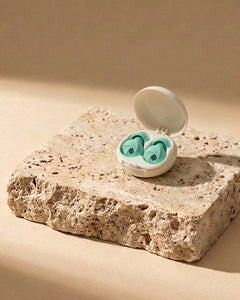
Our CALM sleep earplugs are made for exactly this: soft enough to wear all night and comfortable for side sleepers, so the snoring fades into the background and you can get back to sleep.
If light from their reading lamp or an early alarm also disturbs you, the Mask & Earplugs set pairs CALM with our ECLIPSE blackout eye mask, so you're covered for both sound and light.
Frequently asked questions
Will I still hear my alarm with earplugs in?
Most people can still hear a phone or alarm clock, but everyone is different. Try them on a weekend morning first, or put your alarm somewhere it vibrates close to you.
Is it OK to wear earplugs every night?
For most people, yes. Keep them clean, insert them gently rather than pushing them deep, and stop and speak to a GP or pharmacist if you get ear pain or irritation.
Does sleeping in separate rooms mean something is wrong?
Not at all. Many couples sleep apart some or all of the time simply so both of them can rest. It can be temporary while you work on the snoring.
Keep reading
 Mentioned in this article
CALM earplugs
Shop
This article is for general information and isn’t medical advice.


