

The clocks went back, and an extra hour in bed sounded like a gift. So why are you waking before your alarm, flagging by 8pm and feeling slightly out of step with your own day?
An hour doesn't sound like much, but your body clock doesn't change with the clock on the wall. Here's why the switch back to GMT can unsettle your sleep, and a simple seven-day plan to get back in rhythm.
Quick answer: Keep the same wake-up time every day, get daylight soon after you wake, and dim the lights in the evening. Most people settle within a few days to a week. A steady morning routine does more to reset your body clock than anything you do at bedtime.
Why one hour throws you off
Your body clock is set mainly by light. When the clocks go back, mornings suddenly get lighter earlier and evenings get dark earlier, while your internal clock is still running on the old time. Until it catches up, you may feel sleepy earlier in the evening and wake earlier in the morning.
The change also arrives as the days shorten. Darker evenings mean less natural light overall and more time spent under lamps and screens, which can make the adjustment feel harder (NHS Norfolk and Suffolk).
Your seven-day reset plan
Every day: fix your wake-up time
Pick a wake-up time and keep it every day, weekends included. It's the single strongest anchor for your body clock. Resist long lie-ins, even after a poor night.
Every morning: get daylight early
Within an hour of waking, get outside for 10–20 minutes, or sit by a bright window. Morning light is what tells your body clock the day has started, and it helps you feel sleepy at the right time later on. Even a grey November sky is far brighter than indoor lighting.
Days 1–3: nudge your bedtime
If you're getting sleepy too early, stay up 15 minutes later each night until you reach your usual bedtime. If you're struggling to fall asleep, go the other way: move bedtime 15 minutes earlier each night. Small steps are easier for your body to follow than one big jump.
Every evening: dim things down
Switch to lamps and warm bulbs for the last couple of hours before bed, and give yourself some screen-free time before sleep. Bright, blue-rich light late in the evening tells your body it's still daytime.
Days 4–7: keep everything else steady
- Eat at regular times. Mealtimes are another cue your body uses to tell the time.
- Keep naps short. If you need one, keep it to 20 minutes and before mid-afternoon.
- Move your last coffee earlier. Caffeine can stay in your system for hours, so aim to finish by early afternoon.
- Stay active in the daytime, ideally outdoors.
Making winter evenings work for your sleep
Once you've adjusted, the long dark evenings are here to stay until March. That's actually an opportunity. Darkness is your body's natural cue for sleep, so the more you work with it, by keeping evening light soft and warm, the easier winter nights become.
Where Dreamnox fits
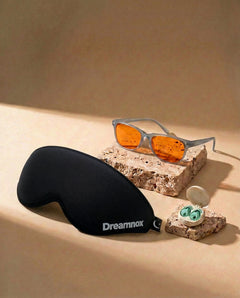
Long winter evenings tend to mean more time with the TV and screens on. Our CORE and HALO glasses with Dusk lenses block 98% of blue light, so you can enjoy your evening without sending your body a daytime signal. They're for evening use only and aren't suitable for driving.
If streetlights creep round your curtains or you're catching up on sleep, our ECLIPSE blackout eye mask is designed for total blackout. For a complete reset, The Sleep Kit brings glasses, mask and earplugs together.
Frequently asked questions
How long does it take to adjust to the clocks going back?
Most people adjust within a few days to a week. Keeping a steady wake-up time and getting morning light can speed things up.
Should I make the most of the extra hour with a lie-in?
It's tempting, but a lie-in can make the adjustment slower. Getting up at your usual time on the new clock helps your body settle faster.
Why am I waking up so early since the clocks changed?
Your body clock is still running on the old time, so it wakes you an hour "early". Morning light and a steady routine usually shift this within a week. If early waking carries on for weeks, it's worth looking at your evening light and bedtime routine too.
Keep reading
 Mentioned in this article
The Sleep Kit
Shop
This article is for general information and isn’t medical advice.


